Where bands come from
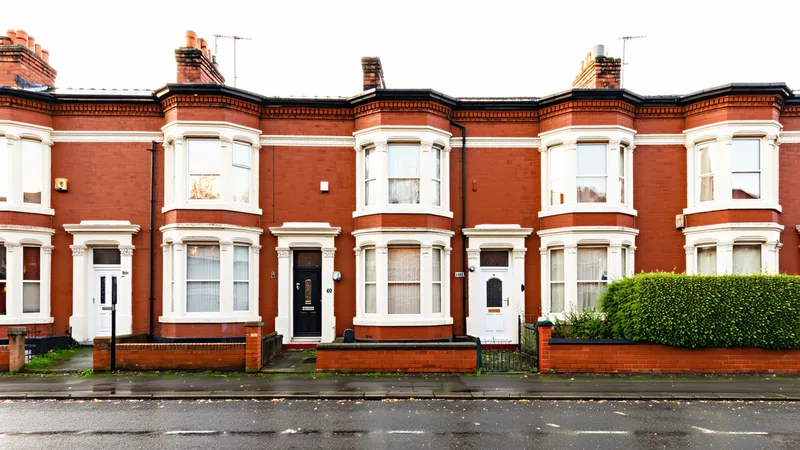
Every residential property in England is assigned to one of eight council tax bands — A through H — based on an estimated property value as it would have been on 1 April 1991. That date is not a typo. The entire banding system in England is based on property values from over thirty years ago, assessed once and never updated.
This has two practical consequences. First, the absolute price used for banding is irrelevant to what the property is worth today. A two-bedroom flat in Manchester that would have sold for £55,000 in 1991 is in Band B (£40,001–£52,000 in 1991 values), regardless of what it costs to rent or buy now. Second, properties built after 1991 were assigned to bands retrospectively by the Valuation Office Agency (VOA), which made comparable assessments based on what similar properties would have been worth in 1991 — an increasingly abstract exercise for properties that didn't exist then.
The bands and their 1991 value ranges for England are: Band A up to £40,000; Band B £40,001–£52,000; Band C £52,001–£68,000; Band D £68,001–£88,000; Band E £88,001–£120,000; Band F £120,001–£160,000; Band G £160,001–£320,000; Band H over £320,000. Most UK properties are in Bands A to D.
How the actual amount you pay is calculated
The band determines your relative position within the local authority's billing structure. Each council sets a Band D rate every year, which is approved by the Secretary of State if it exceeds the referendum threshold (currently 3% without a local vote, or 5% for councils with social care responsibilities). Your annual bill is then a fraction or multiple of the Band D rate, depending on your band.
The multipliers are fixed nationally: Band A pays 6/9 of Band D; Band B pays 7/9; Band C pays 8/9; Band D pays the full rate; Band E pays 11/9; Band F pays 13/9; Band G pays 15/9; Band H pays 18/9 (double Band D). This structure means a Band H property always pays exactly three times what a Band A property pays in the same local authority area.
The annual Band D rate varies considerably by location. Metropolitan areas with higher service costs tend to have higher Band D rates. Tower Hamlets in London, Manchester City Council, and Leeds City Council all set different Band D rates each April. Your bill will be one of these annual amounts divided by 10 — council tax is collected in 10 instalments from April to January, with February and March free. This is a genuine quirk that catches many people out when budgeting.
Why your first council tax bill is often a surprise
Think of a tenant moving into a Leeds property in October. The council tax year runs April to April, so when they move in they don't owe from the start of the year — they owe from October. But the council doesn't always issue a revised bill immediately on move-in. If the previous tenant closed their account properly, the council may write to the new occupant within a few weeks. If the previous tenant didn't notify the council, or if the landlord didn't pass on the contact details promptly, the first letter can arrive two or three months after move-in.
That letter often covers multiple months retroactively. A bill for £480 covering three months of Band C in a Leeds borough is not unusual, and seeing it as your first contact with council tax is jarring if you assumed it was sorted. The solution is to register yourself with the council immediately on move-in, before they contact you, using the council's website or phone number.
Discounts, exemptions, and reductions
Full council tax assumes two or more adults living in the property. Several common situations entitle you to a reduction:
- Single person discount: If you're the only adult in the property, you're entitled to a 25% discount. You have to claim this — it's not automatically applied. Contact your local council directly or apply online.
- Full-time students: Students are disregarded for council tax purposes. A property occupied only by full-time students is entirely exempt. If you live with a mix of students and non-students, the non-students pay but each disregarded student reduces the effective adult count.
- Council Tax Reduction (CTR): If you're on a low income, you may qualify for a means-tested reduction from your local council. Each local authority sets its own CTR scheme, so the reduction available varies by location.
- Severely mentally impaired: A registered person with a severe mental impairment is disregarded, which can remove them from the adult count and trigger the single-person discount.
- Empty properties: Unoccupied and unfurnished properties may be exempt for up to 6 months, but this depends on the local authority — some charge full rate immediately, others charge a premium on long-term empties.
Challenging your band: when it's worth doing
You can challenge your council tax band if you believe it was incorrectly assigned. The grounds for a challenge are specific: you can request a review within six months of becoming liable (i.e. moving in), or if a relevant material change to the property has occurred. You can also challenge if a comparable neighbouring property has recently had its band successfully reduced.
The process is through the Valuation Office Agency (VOA), not your local council. You contact the VOA, provide comparable evidence (properties nearby in a lower band, sold or rented at similar prices in 1991-equivalent terms), and they review the decision. If they agree, your band is reduced and you receive a refund for the overpaid amount — sometimes going back years if the error was longstanding.
We're not saying challenging your band is a guaranteed win or the right move for everyone. The VOA may disagree, or may even raise your band if they find you're actually underbanded. Around 20-30% of challenges in England result in a successful reduction, which is a meaningful proportion but not a majority. It's worth checking if comparable properties in your street are in a lower band before making a formal challenge.
How Arrival handles council tax registration for you
Registering for council tax is one of the five steps Arrival manages when you set up with us at move-in. We submit your registration to the relevant local authority using their online registration API, provide your move-in date and tenancy details, and flag any applicable discounts (single occupancy, student status) based on the information you provide in your setup form. You still receive correspondence from the council directly — that's how the billing system works — but you don't have to navigate the registration process yourself.
The council tax band for your property is already set by the VOA and beyond what any third party can influence at the point of move-in. What we handle is the administrative part: making sure the council knows you're there, knows your move-in date, and has what they need to issue your bill correctly from day one rather than two months later with a backdated balance.
The band system's 1991 basis is archaic and the subject of periodic reform discussion — the Office for Budget Responsibility has flagged it as a distorting feature of UK housing costs in multiple reports. But it's what you're working with right now, and understanding how it works means you pay what you actually owe rather than what an administrative accident says you owe.