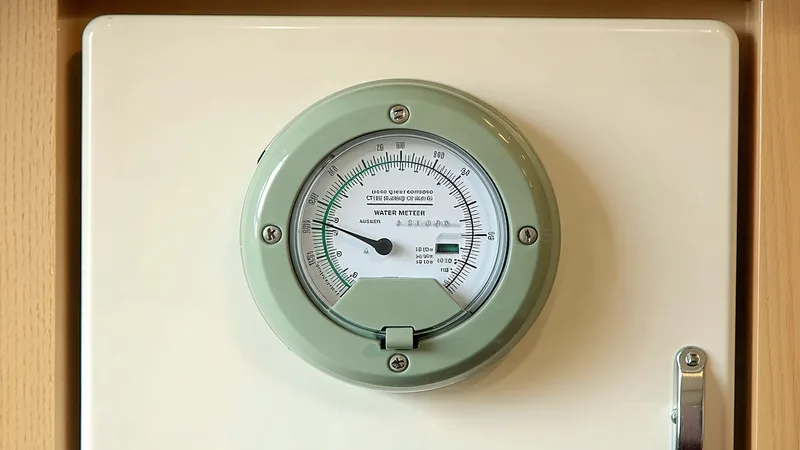
Who is your water supplier?
England and Wales are divided between ten water and sewerage companies (sometimes called WASCs), each responsible for both water supply and sewerage collection in their region. The main ones for renters in the areas Arrival currently serves:
- United Utilities: Covers Greater Manchester, Cheshire, Lancashire, Cumbria, and the North West. If you're renting in Manchester, Salford, Stockport, or surrounding areas, this is your water company.
- Yorkshire Water: Covers West and South Yorkshire, the East Riding, and most of North Yorkshire. If you're in Leeds, Bradford, Sheffield, or Harrogate, this is your supplier.
There are also several water-only companies in England (supplying water but not sewerage), and in these areas a separate sewerage company handles wastewater. The majority of UK renters are with a single WASC that handles both, so one account covers both services.
Metered versus unmetered billing
Water billing in the UK uses one of two approaches, depending on whether the property has a water meter installed.
Unmetered billing charges a fixed amount based on the rateable value (RV) of the property — a historical assessment used for rating purposes before council tax replaced domestic rates in 1990. The RV system is widely considered outdated and is gradually being phased out as meter installation expands, but it's still in use for a significant proportion of UK homes. With unmetered billing, your water bill is the same amount regardless of how much water you actually use. A household of four people showering daily and running a dishwasher pays the same as a single occupant who's away half the week.
Metered billing charges for actual consumption, typically at a per-cubic-metre rate, plus a standing charge. Water is measured in cubic metres (m³), with one cubic metre equal to 1,000 litres. Average household water use in England is approximately 141 litres per person per day, or roughly 3.2 m³ per week for a single occupant. Metered customers who use less than the unmetered charge threshold pay less; those who use more pay more.
Which billing method is better for renters?
The standard guidance is that metered billing is financially advantageous if the number of people in your household is fewer than the number of bedrooms. This reflects the fact that unmetered bills were historically calibrated for average household occupancy of around 2.4 people, and smaller households use less water than that average.
A single person in a two-bedroom flat in Leeds is almost certainly paying more on unmetered billing than they would on a meter. A couple in a two-bedroom flat is likely to be close to break-even. A household of three or more in a two-bedroom flat may be better off unmetered, because their actual usage exceeds what the unmetered rate assumes.
We're not saying everyone should immediately request a meter — the calculation depends on your specific household size and usage habits, and some people prefer the predictability of a fixed bill. But if you're a single occupant or a couple in a property with an extra bedroom, requesting a meter is worth investigating. Water companies in England are legally required to install a meter on request, and most allow a 12-month trial period during which you can revert to unmetered billing if the metered rate turns out to be higher.
Registering as a new occupant
When you move into a property, you need to contact the regional water company to register as the new occupant. This is straightforward and typically done online. You provide your name, move-in date, and the property address. If the property has a meter, take a reading on your move-in day and submit it to the water company at registration — this prevents any discrepancy with the previous occupant's final reading from appearing on your first bill.
Unlike energy, there's no concept of a "deemed contract" or automatic tariff inheritance for water — you're simply registering as the new bill payer. The water company will issue your first bill covering from your move-in date, typically quarterly or monthly depending on the company and your billing preference.
What your water bill actually contains
A standard UK water and sewerage bill contains four charge components:
- Water supply charge: The cost of clean water delivered to your property, either at a fixed unmetered rate or per m³ for metered customers, plus a standing charge.
- Sewerage charge: The cost of collecting and treating wastewater. For metered customers, the sewerage volume charge is typically calculated as a percentage (often around 95%) of your incoming water usage, on the assumption that most water you use eventually goes down the drain.
- Surface water drainage charge: A charge for draining rainwater from your property's roof and paths into the sewer network. Some properties where surface water drains elsewhere (gardens, soakaways) may qualify for a reduction — worth checking with your water company.
- Highway drainage charge: A share of the cost of draining water from public roads. This is a relatively small element and not applicable in all billing areas.
Water pressure issues and supply problems
Renters in older properties occasionally encounter low water pressure, particularly at upper floor levels in buildings served by mains pressure. In England, water companies are required to maintain a minimum pressure of 1 bar at the boundary of your property (the entry point to your building, not at your tap). If pressure at your property is consistently below this, you can report it to your water company and request an investigation.
The distinction between supply infrastructure (the company's responsibility) and internal plumbing (the landlord's responsibility) matters here. A blocked or narrowed pipe inside the property causing low pressure is a landlord repair issue under your tenancy agreement. A wider area pressure problem affecting multiple properties is the water company's issue. Identifying which you're dealing with usually requires the water company to check the mains pressure at the boundary first.
How Arrival handles water billing
When you register with Arrival at move-in, we contact your regional water company on your behalf, register you as the new occupant, and submit any opening meter reading you've provided. Your water bill is consolidated into your single monthly Arrival direct debit. In your Arrival dashboard, you can see your water usage (where smart water meters are installed) or your fixed unmetered charge, alongside your energy and broadband costs.
Water billing isn't the most complicated part of the UK utility landscape, but it does have enough regional and billing-method variation to catch new renters out. Understanding the basics means you know what to look for on your first bill, and what to question if the amount doesn't make sense.